
"French coffee buyers"
700 article(s) found

A brief introduction to the treatment method of grinding degree and baking degree of fine coffee beans in Berman Manor, Kenya.
There are many producing areas in Kenya that strive to preserve the native forest ecosystem, protect the natural gene pool, support the reproduction of wild coffee varieties and breed a variety of coffee trees. French and British missionaries and researchers sifted in Kenya at the beginning of the 20th century
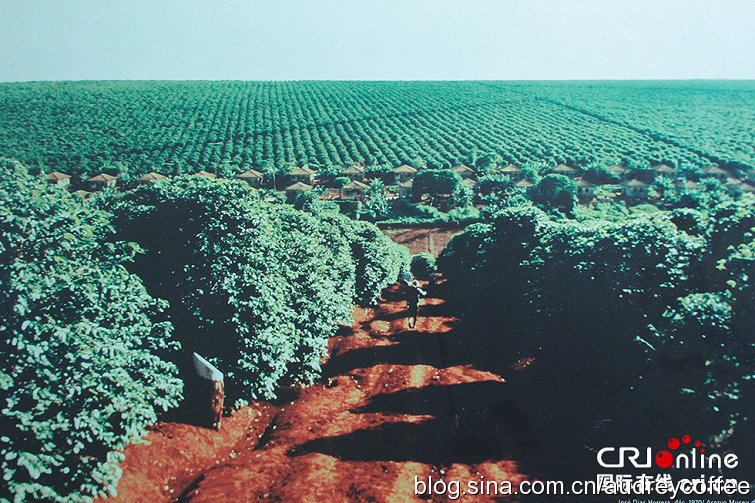
Take you to a coffee farm in Brazil to learn about coffee beans.
Brazil is the largest coffee producer and the second largest coffee consumer in the world. In Brazil, wherever you go, you can have coffee in the morning or at night. Unlike the Italian concentrate, or latte or cappuccino, as most of us know, what Brazilians like most is the kind of ordinary coffee in a small cup, which is hot and mellow. And you can't.

A brief introduction to the Market Price of Fine Coffee Bean varieties in Jinchu Valley, Kenya
Internationally, the increase in the number of Kenyan coffee is obvious, from 1969 to 1970, when 800000 bags were exported, to 1985 and 1986, when the output increased to 2 million bags. Now the yield is stable at 1.6 million bags, with an average yield of about 650kg per hectare. Even before coffee prices skyrocketed in recent years, the average price of coffee in Kenya had been rising. Price ratio from 1993 to 1994: 12
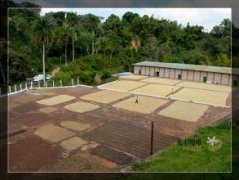
A brief introduction to the flavor, taste and aroma characteristics of Kenyan Jinchu boutique coffee beans
Large farms usually have independent treatment facilities. A large number of small farmers usually pick ripe coffee fruits by hand. Coffee picking is a labor-intensive job that requires the whole family to deploy and even hire workers during the harvest season. The fresh fruits of the picked coffee need to be promptly transported to the cooperative-owned coffee processing plant for pulping, and the means of transport may be ox carts.

A brief introduction to the flavor of Kenyan hand-roasted coffee
A brief introduction to the flavor description of Kenyan hand-roasted coffee, although the classification is different, it does not mean that their flavor will be good or bad. And Kenya's unique double fermentation water washing method will improve the original acid quality and cleanliness again. The fine products we usually drink in Kenya are sl28 and sl34 varieties, with rich berry tonality, solid body,

A brief introduction to the flavor and aroma characteristics of Kenyan Jinchu boutique coffee beans with sweet green tea
Aromatic, full-bodied, with fruit flavor, taste rich and perfect. Kenyan coffee has a wonderful fruit flavor, tastes like BlackBerry and grapefruit, and is a favorite of many coffee gluttons. This coffee has an excellent medium purity, crisp and refreshing taste. It has a fresh flavor and is most suitable for drinking iced coffee in summer. When tasting this coffee, such as

Rich and perfect taste of Kenya Jinchu boutique coffee beans grinding degree baking degree treatment method simple
SL-28 and SL-34 help Kenyan coffee to form its own unique flavor characteristics and establish a perfect reputation in the coffee industry. Although the yield of SL28 was not as high as expected the copper leaf color and broad bean-shaped beans have great sweetness balance and complex flavor as well as significant citrus and black plum characteristics. While SL34 and SL28 are similar in flavor, except that they are more complex.

Laos quality Coffee Plantation DAO HEUANG
Laos, whose full name is Laos people's Democratic Republic, is a landlocked country on Indo-China Peninsula and one of the only two socialist countries in Southeast Asia, the other being Vietnam. Vientiane, the capital, is a member of the Association of Southeast Asian Nations. Laos is mostly mountainous and plateau, with high terrain in the north and low in the south. Shangliao is the highest, known as the roof of Indochina. The Sichuan-Kuomintang Plateau is known as the ridge of Laos, to the south.
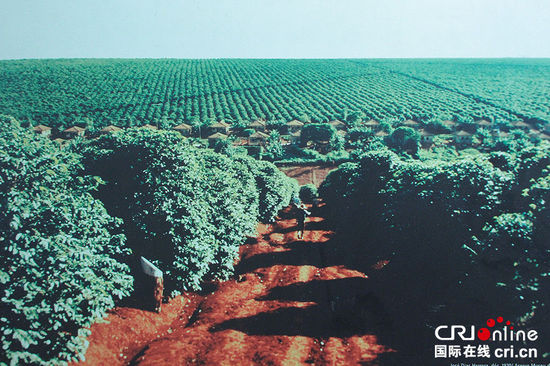
Review the coffee history of Brazil in the Coffee Museum
Brazil's Coffee Manor International online report (Reporter Zeng Yun): Brazil is the largest coffee producer and the second largest coffee consumer in the world. Zeng Yun, a reporter based in Brazil, will take you to the Coffee Museum in Santos, the coffee city of Brazil, to review the history of coffee in Brazil. In Brazil, wherever you go, you can have coffee in the morning or at night. No.

Green tea sweet Kenya Kam Chu Valley fine coffee beans cultivation geographical location climate altitude profile
The usual choice of light roasting, but in order to retain the original very rich fruit flavor in the raw beans, we will enter the bean temperature to 210℃, temperature point to maintain at 125℃, into the pot after observing the temperature point after the small fire steam roasting, in 4 minutes and 30 seconds to observe the coffee beans white evenly, and then urge the fire to 5 minutes and 30 seconds to complete dehydration, in 8 minutes to reach 175℃ when the heat is reduced, so that coffee

Brief introduction of planting Market Price of Fine Coffee Bean varieties in Jinchu Valley of Kenya with Sweet Cherry
Large farms usually have independent treatment facilities. A large number of small farmers usually pick ripe coffee fruits by hand. Coffee picking is a labor-intensive job that requires the whole family to deploy and even hire workers during the harvest season. The fresh fruits of the picked coffee need to be promptly transported to the cooperative-owned coffee processing plant for pulping, and the means of transport may be ox carts.

Colombia Fine Coffee Flavor Coffee Bean Producing Area Coffee Bean Characteristics Good Coffee
The term boutique coffee was first coined by Ms. Knudsen in Coffee and Tea magazine in the United States, when Ms. Knudsen served as B.C. Ireland's coffee buyer in San Francisco, she is very dissatisfied with the industry's neglect of green coffee bean quality, and even some large roasters mix a lot of robersta beans into the mixed beans, so she proposed the concept of fine coffee advocacy line

Kenyan coffee Kenya Montello Manor introduces Kenyan coffee drinking method
Professional coffee knowledge exchange more coffee bean information please follow the coffee workshop (Wechat official account cafe_style) Kenya is located in the East African Plateau, close to Ethiopia, the origin of coffee, but the mass production of coffee beans is more than a thousand years later in Ethiopia. About a hundred years ago, the then British ruling class invested heavily to encircle large tracts of land and hire local original land.

A brief introduction to the description of the flavor and aroma characteristics of Kenya Jinchu boutique coffee beans with cherry sweetness
Kenya AA coffee beans are adjacent to Ethiopia, the origin of Arabica coffee trees in the north of Kenya, but it was not until the beginning of the 20th century that they began to cultivate coffee. In the 19th century, missionaries introduced Arabica trees from the leaves, but did not plant them in large quantities. It was not until 1893 that coffee was cultivated on a large scale by the introduction of Brazil's ancient bourbon caffeine seeds. That is to say, at present

A brief introduction to the History and Culture of the Origin and Development of Fine Coffee beans in Jinchu Valley, Kenya
Kenya AA coffee beans are adjacent to Ethiopia, the origin of Arabica coffee trees in the north of Kenya, but it was not until the beginning of the 20th century that they began to cultivate coffee. In the 19th century, missionaries introduced Arabica trees from the leaves, but did not plant them in large quantities. It was not until 1893 that coffee was cultivated on a large scale by the introduction of Brazil's ancient bourbon caffeine seeds. That is to say, at present

A brief introduction to the planting Market Price of Fine Coffee Bean varieties in Jinchu Valley of Kenya with fresh Flavor
Kenya AA coffee beans are adjacent to Ethiopia, the origin of Arabica coffee trees in the north of Kenya, but it was not until the beginning of the 20th century that they began to engage in coffee cultivation. In the 19th century, missionaries introduced Arabica trees from the leaves, but did not plant them in large quantities. It was not until 1893 that coffee was cultivated on a large scale after the introduction of Brazil's ancient "bourbon" coffee seeds. That is to say,

A brief introduction to the treatment method of grinding degree and baking degree of Kenyan Jinchu Valley boutique coffee beans with sweet cherry
SL-28 and SL-34 help Kenyan coffee to form its own unique flavor characteristics and establish a perfect reputation in the coffee industry. Although the yield of SL28 was not as high as expected the copper leaf color and broad bean-shaped beans have great sweetness balance and complex flavor as well as significant citrus and black plum characteristics. While SL34 and SL28 are similar in flavor, except that they are more complex.

A brief introduction to the treatment method of grinding degree and baking degree of Kenya Jinchu boutique coffee beans with fresh flavor
There are different flavors of coffee, so you can't drink three or four cups in a row like tea or cola, but the size of a formal coffee cup is just right. The average amount of coffee to drink is 80-100cc. Sometimes if you want to drink three or four cups in a row, you have to dilute the concentration of coffee, or add a lot of milk, but you still have to consider the degree of physical needs to add or decrease coffee.
A brief introduction to the history and culture of the origin and development of Kenyan Jinchu boutique coffee beans with fresh flavor
Kenya AA coffee beans are adjacent to Ethiopia, the origin of Arabica coffee trees in the north of Kenya, but it was not until the beginning of the 20th century that they began to cultivate coffee. In the 19th century, missionaries introduced Arabica trees from the leaves, but did not plant them in large quantities. It was not until 1893 that coffee was cultivated on a large scale by the introduction of Brazil's ancient bourbon caffeine seeds. That is to say, at present

A brief introduction to the treatment method of grinding degree and baking degree of Kenyan Jinchu boutique coffee beans with sweet green tea
We still choose the familiar medium and shallow baking, but in order to retain the very rich fruit flavor in the raw beans, we increase the temperature of the beans to 210 ℃ and keep the temperature at 125 ℃. After entering the pot, we observe the return point and steam the coffee beans over low heat, and observe until the coffee beans whiten evenly at 4 minutes and 30 seconds, then press the fire to complete the dehydration in about 5 minutes and 30 seconds, and then reduce the firepower at 175 ℃ in 8 minutes to make the coffee coffee.